Monday, August 20, 2012

Employer Branding Numbers Everyone Should Know!

As experts in employer branding, we’re constantly researching the latest innovations and trends, and I’ve come across some recent recruiting studies that have some eye-opening findings. Think you don’t need an employer branding strategy? Read on.

88%
The percent of employees, out of 19,000 surveys and exit interviews, who leave an organization for reasons other than money. In that same survey, 89% of employers said they believed that employees left only because of money! (The Saratoga Institute)

What this means for you: You can compete even if you can’t offer top dollar. Generations X and Y consider many other factors, including culture, perks, flexibility, and corporate responsibility. If offering average pay and benefits is scaring you from reaching out to prospects, rest assured that your organization probably has one or more other strengths that will impress them.

60%
The percent of employees who would recommend jobs at their company to a close friend or family member — but employers say that only 23% of their employees participate in employee referral programs! (Bernard Hodes Group)

What this means for you: Organizations must do more to encourage their employees to refer talent. More than half your employees want to refer friends; they either don’t know how or don’t think about it when the opportunity comes. If you don’t have a referral program, you should create one. And if you have one, you should explore ways of getting information to your employees in a continuous, memorable way.

An employee referral program that Brandemix created for Kaplan
55%
Percent of employees, from more than 1,700 organizations worldwide, who believe “it’s important that other people want to work for my employer.” (Employer Brand International)

What this means for you: Employer branding isn’t just for recruiting; it can help retain talent, too. Just as employees leave for reasons other than money, they also stay for reasons like reputation and pride in work. Even if your recruiting is going somewhat smoothly, employer branding can help keep your current employees satisfied and productive, lowering your overall hiring costs.

51%
The percent of global employers, out of 632 surveyed, who believe that not having the right people had some effect on their companies’ losing business. (Universum EB Insights 2011)

What this means for you: Talent can be an unappreciated, overlooked, and under-funded resource. Some CEOs are familiar with cost-per-hire, but what about quality of hire? The wrong hire can cost more money than not hiring at all. In this economy, it may be easy to fill certain positions with warm bodies, but finding top talent who will lead the next generation of your company requires a compelling, differentiated message.

Image from Universum Employer Branding Insights 2011
3%
The percent of employers, out of a survey of 175 HR, communications, and marketing professionals, who said they had no employer branding strategy. 51% had an established strategy and most of the others were in the process of developing or refining theirs.(Bernard Hodes Group)

What this means for you: You must have an employer branding strategy. Presuming that you are an “employer of choice” with no need to engage job-seekers is no longer an option. Ninety-seven percent of your competitors are communicating their mission, vision, values, culture, and benefits to your talent pool; you have to get in the game or you’ll give away the victory.
 
-->
Interesting information, no? And here’s one more number: 33%. It’s the percent of companies that plan to increase their investment in employer branding. Are you one of them? Contact Brandemix for a free employer branding consultation.

Monday, August 13, 2012

Why Zappos is a Social Media Superstar

As many of you know from my speaking engagements and webinars, I’m always looking for brands that are using social media in innovative ways. I honor these organizations with the name “SoMe Superstars.” Past winners include State Farm and PepsiCo. 

Today I’d like to recognize a company that’s taken a fantastic brand and brilliantly expanded it into the social space: Zappos.

I’ve written about my love for Tony Hseih’s online shoe company before, but now it gives me great honor to truly call it a Superstar.

With more than 2,600 YouTube subscribers, 260,000 Facebook Likes, and almost 2.6 million Twitter followers (across seven accounts), Zappos has definitely made a social media splash. But lots of footwear and apparel companies appeal to young social media users. How does Zappos stand out? Here are a few reasons.

Website Videos – Instant, Honest, and Short
Zappos created a team of ten employees to make videos about every single one of its shoes. The videos are done on-site and are unscripted. Since starting the program in 2009, these employees have now created around 100,000 videos. They’re all under a minute, so that customers don’t get bored. Even better? Each video has three prominent sharing options – Twitter, Facebook, and HTML code for bloggers. The videos allow Zappos employees to share their love of the product and encourage customers to share their love on social media.


Social Recruiting, Too
Zappos offers a YouTube channel just for recruiting, with 33 videos. The content ranges from employee interviews to a look at the Zappos HQ fitness center to advice on how to dress for your job interview. This is a fantastic resource for job-seekers, with each video showcasing the spirit of fun and customer service that is the foundation of the Zappos brand. On Twitter, ZapposInsights and Inside_Zappos both offer a behind-the-scenes look at the company's unique culture, with lots of interaction with followers.


Their Own Personal Pinterest
The Zappos website has a unique feature that really makes it a superstar. It’s called the TweetWall; a collection of tweets from anyone who has linked to a Zappos product. It’s a form of crowdsourcing, where customers can see what styles have the most buzz. And instead of encouraging fans to tweet about the company, Zappos is rewarding fans for already doing it. Fans know this, and may tweet about Zappos just get a spot on the coveted wall.


Through YouTube, multiple Twitter profiles, employee videos, and the TweetWall, Zappos has created a virtuous circle: fans celebrate the brand because the brand recognizes the fans who celebrate it.
 

For sharing videos, tweets, and photos with their fans, and allowing their fans to share content in return, I name Zappos a SoMe Superstar!

Do you know of a brand that deserves superstar status? 
Drop me a line.

Tuesday, July 31, 2012

Brandemix Website Makeover Contest!

As Brandemix looks forward to the launch of our own new website (coming soon), it's time to recognize and celebrate great website makeovers!

We're holding a contest to reward the best refresh, revamp, and relaunch of websites (Click here for contest rules). Any organization, any size, profit or nonprofit.


Simply submit "before and after" images to website@brandemix.com and we'll post it the top ten judged entries on our Pinterest board during the voting period. 
Feel free to post as a web designer or a fan, even if you weren't responsible for the change. Don't have the "before"? Use the Wayback Machine. 

The redesign with the most total likes, comments, and repins will win a free press release, distributed to hundreds of outlets, announcing both the design achievement and the victory. 


We'll also capture the success and and those responsible for it on video, and post it here on our blog and 
our Facebook page. The whole world will learn all about the website and the brand.

What kind of things are we looking for? Here's the Lindal Group, a manufacturing company, before their website refresh:


Not bad, but heavy on text, and with no real branding. Navigation is on the left, the top, and the right, making for a confusing interface. Now look at the current site:


Much more visually interesting! Plenty of images of the products that Lindal actually makes. Clearer navigation and a search function to make browsing easier. And you've got to love the branding: "Your Innovation Partner." The previous website didn't have a tagline.

This and other website makeovers are on our contest pinboard on Pinterest. Vote by commenting, repinning, liking -- or all three! The website with the most total votes by Monday, September 17 wins the free press release, video interview, and eternal internet fame.

Submit your site, or any other, by emailing website@brandemix.com. Remember to include both a before and after shot.

Good luck!

Monday, July 23, 2012

When Brands Collide: What Happens to the Logo in an M&A?

Branding and marketing executives beware. Although this year has seen a precipitous fall off in M&A activity, economic signs point to a strong finish buoyed by signs of recovery in Europe.

Is your company a future hunter or prey? What might this mean to your brand?


“Historically, the decision on how to merge two large companies' brand identities and logos seems to have been made haphazardly,” write Ellen Sluder and Neil Wieloch of consulting firm CoreBrand. “Rarely do companies take the time to consider how to [re-brand] most effectively.”

URLpulse compiled a gallery of “before and after” images of merger logos. It’s clear right away which companies tested and evaluated their new branding and which ones didn’t give it much thought.

In a Harvard Business Review article, Jonathan Knowles, Isaac Dinner, and Natalie Mizik recently showed that companies that “fuse” their two logos perform better financially than mergers in which one partner’s identity is discarded or both partners’ logos are maintained separately. So it’s better to be a logo united than one divided.


Speaking of united, 
many branding experts criticized the logo that resulted from last year’s merger of United Airlines and Continental Airlines. The new company kept United’s name and a very similar font, along with Continental’s blue globe icon. Basically nothing changed, and an opportunity to showcase a new, stronger airline was lost. Supporters claimed that changing signage at hundreds of airports all over the world and repainting two fleets of planes would cost millions of dollars. But what if the change was phased in? And how much money is the new, boring brand losing for the airline? Did the leadership examine all the options before they decided not to change anything?

Take it from the expert. Brandemix Creative Director Clarissa Zorr weighs in based on her own experience with merger logo design. “The brand design should take into consideration the reasons for the merger and what the new brand will stand for,” she told me. “Is it a paradigm shift, a hostile takeover, or are they simply joining forces?”

Good advice. So what are the “fused” logos that get it right? Verizon comes to mind. It’s the result of Bell Atlantic acquiring GTE. But you don’t see either of those companies’ logos, colors, or typefaces. The new company positioned itself as a 21st-century high-tech innovator totally unlike its old-fashioned parents.


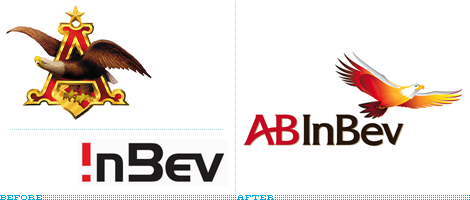
I also like the new AB InBev logo. It updates the 130-year-old Anheuser-Busch image and tones down the futuristic InBev font to create a new look that’s both classic and forward-looking.


The takeaway? Never overlook your branding. As Zorr says: “Time, budget, PR, and overall marketing efforts all play a role in the decision-making process.” A merger or acquisition can be exciting, tense, or even confusing for employees. Make sure they have a strong brand behind them and you’ll be on the path to success.

If you’re interesting re-branding your organization, talk to us. Been through a recent M&A? we’d love to hear from you.

Wednesday, July 11, 2012

Six Steps to an Effective Brand Plan

You’ve heard about it at meetings – possibly from me. But what is a “brand plan”? It’s both an internal and external document. Internally, it describes your organization’s focus and goals, to align all employees with your mission. Externally, it provides a roadmap for marketing and promotion.

How do you create a brand plan? It can take weeks of research, discovery, analysis, and creative development. But here’s a slimmed-down version to help get you started: Start With a Vision
Your vision statement is aspirational. It’s about the future, not the present; it’s who you want to be as a company and where you want to be in the marketplace. It’s a goal that you will try to attain for the next three, five, or 10 years. Don’t be timid! A vision statement can be grand, bold, and optimistic. It should be an ideal worth aspiring to. This step involves research and discovery from everyone in the organization, as they’ll all be asked to contribute toward the goal.

Plan the Mission
The vision is where you want to be; the mission is how you get there. How will you achieve your goals and how will you know when you’re successful? At best, a mission statement also includes a brief version of your company’s philosophy and purpose. As Entrepreneur.com says, “Your mission statement doesn't have to be clever or catchy – just accurate.” Spend time fine-tuning every single word, since your mission statement will be your guiding principles for the life of your vision.

It's all right to have your head in the clouds when writing your vision and mission.
SWOT It Out
A brand plan includes an analysis of your company’s place in the market, broken down into four parts: Strengths – including your expertise, uniqueness, resources, or anything else that gives your company an advantage. Weaknesses – issues that may be holding you back from your potential; what knowledge or capabilities are you missing? Opportunities – such as an emerging customer need that you can meet, a new technology that will change your market, or a reduction in regulations or costs. Threats – problems on the horizon such as a customer need, technology, or law that makes the market worse for your company.

Strategize Tactically
You now know where you want to go, how you’ll get there, and your current and future advantages and disadvantages. Now you can create a strategy that will help you get from here to there, using your strengths to take advantage of the opportunities and avoid the obstacles. This means creating a strategy, the large-scale plan for success. Within this are tactics, the individual programs, products, and initiatives that contribute to the strategy. In war, strategy involves which battles you’re going to fight; the tactics are how you fight them. Don’t get them mixed up or you can find yourself wasting resources on a tactic or overlooking the importance of a strategy.

Bring in the Numbers
Visions and missions can be “touchy-feely,” but a brand plan should include numbers. If you’re launching a new product, how many will be in your first shipment? What are your metrics for success – sales, hires, press mentions, social media responses? What’s the minimum ROI that will allow you to move on to the next step? And what’s the budget for each of your tactics? Don’t let your enthusiasm make you neglect the most important numbers – time and money!

Some brand plans are measured in months; others in hours

3, 2, 1, Launch!
The plan is in place. Now it’s time to execute. Put that new budget to use and start designing, writing, creating, and shipping. After so much discussion and preparation, everyone will be eager for results. Help them out with a quick win, an easily achieved goal that boosts your employees’ confidence and builds momentum for the next round. Quick wins silence doubters and give you something to point to at the first few status meetings and say, “This worked.”

Your brand plan is finished. Guided by your mission statement, you’re implementing your strategy and tactics, making your vision a reality. You’ve made some quick wins, you’re analyzing the metrics, and you’re aware of both the perils and the promise of the future. You’ve put in place a solid foundation for success.

At Brandemix, we specialize in brand planning, brand architecture, brand positioning, and branding initiatives. If you’d like to learn more, contact me. I’d love to share our knowledge with you.

Wednesday, July 4, 2012

How IBM's Intranet Improves Employee Development and Retention

At  HR/NY's fabulous social media recruiting panel (which I moderated,) the audience and I were wowed as Nabeel Ahmad, Learning Developer at IBM, rocked the New York Times Building. 

He showed how IBM, the conservative corporate giant, has been letting its hair down and opening its intranet to new ideas. The results have been greater collaboration, better retention, and more advancement opportunities. Here's how IBM did it, and how you can too:

Employees Thank Each Other 
Instead of a top-down rewards program, IBM allows its employees to recognize each other with "Blue Thx." These can be sent to any colleague anywhere in the world. And it's not a private interaction; a leaderboard shows who's received the most "Thx" in the last 30 days. Kind, simple gestures like these help unite IBM's global workforce of 400,000. 

Employees Shadow Each Other
IBM's ShadowMe program connects employees with senior executives based on department and location. A search for "social learning," for example, brings up more than 800 IBMers across the entire company. Employees can physically shadow their mentors at the same office, or virtually follow mentors anywhere in the world. An employee never has to miss a learning or development opportunity because the expert in their field is in a different building, city, or country.


Employees Learn From Each Other
IBMers have access to a crowdsourcing resource, allowing them to ask their colleagues questions about any topic. An HR question posted here, for example, yields much faster results than an email submitted to HR...and it cuts down on HR's workload. While there's a danger that employees might give each other wrong answers, I've found that, like Yelp restaurant reviews, the truth usually rises the top. 

Employees Don't Have to Email Each Other
Nabeel asked us if we agreed with the statement "I live in my email." That attitude is a problem at IBM, so senior leaders look for any way to keep employees' inboxes clean. When new CEO Ginni Rometty took over in January, she didn't send an email announcement; she put her speech on video and made it available only on internal channels. This showed everyone at IBM how serious she was about cultivating the intranet.


IBM's collaborative spirit even extends to live events. Before a recent technology panel, employees were asked to submit questions ahead of time. But instead of picking his favorites, the moderator made all the submissions public and allowed employees to vote for the best ones. This ensured that the panel addressed the issues most pressing to the largest group of people. If you've been to an event where someone asks a question that's relevant only to them, you know how important this is.

Nabeel showed us that IBM's conservative image doesn't really reflect the true nature of its employees' creativity, resourcefulness, or satisfaction. If your business is large enough for an intranet, we'd love to put the lessons of IBM and other corporate superstars to work for you. Contact me for more details.

Tuesday, June 26, 2012

Social Media Fun Facts


In honor of my appearance on HR/NY’s Social Media in the Talent Environment panel (moderated by Brandemix founder and CEO Jody Ordioni), here are some interesting facts about social media that I’ve learned in my recent branding research.

The record for most tweets per second is 25,088, which happened during 2011’s annual TV broadcast of Castle in the Sky in Japan. Viewing the 1986 animated film has become a national tradition, similar to Americans watching It’s a Wonderful Life at Christmas. (Geekosystem)

The previous record for most tweets per second was 13,684, which happened during a Champions League soccer match between Barcelona and Chelsea in April. Before that, it was 12,233, which took place during the New York Giants’ game-winning drive in Super Bowl LXVI in February. (CNET)

Image courtesy of Infographic Labs

Zynga, creator of games like Words With Friends, Cityville, and Indiana Jones, was responsible for 12% of Facebook’s total revenue in 2011. (Forbes)

Searching for the phrase “How to land an airplane” on YouTube brings up 171 results. (YouTube)

The five most popular YouTube videos of all time are music videos, including “Baby” by Justin Beiber at #1. The #6 most popular video is “Charlie Bit My Finger – Again!” (YouTube)

The most followed pinner on Pinterest is Jane Wang, with more than 1.5 million followers. She is Pinterest co-founder Ben Silbermann’s mother. (Zoomsphere)

Image courtesy of Kate T.
In February, the most repinned image on Pinterest was a photo of a woman’s closet. The tenth-most repinned image was a photo of a bookshelf. Two of the top ten were pictures of cookies. (Pinfaves)

The top three brands on Facebook are Coca-Cola, Disney, and Starbucks; all consumer brands. The top three brands on Google Plus are Android, Mashable, and Chrome; all in technology field. (Pardot)

Two people join LinkedIn every second. It’s the 36th-most visited site in the world. Its fastest-growing demographics are students and recent college graduates. (Business 2 Community)

The location with the most Foursquare check-ins is Hartsfield-Jackson Atlanta International Airport, with more than 632,000 check-ins. It’s followed by airports in Los Angles (LAX), San Francisco, and New York (JFK). By comparison, Disneyland has 200,000 total check-ins. (Foursquare)
Image courtesy of Coasttocoast
Disneyland is, however, the second-most photographed location on Instagram. The first is AT&T Park in San Francisco, home of the Giants baseball team. (Instagram)

On Instragram’s list of 15 most photographed places are three New York City locations: the High Line, Madison Square Park, and the Metropolitan Museum of Art. The Empire State Building and the new World Trade Center did not make the list. (Instagram)

Want to learn more about these and other social media sites, and how Brandemix can use them to help your consumer branding or employer branding campaigns? Drop me a line.