Monday, April 16, 2012

The Creative Behind the Brande!


Recently we hosted a guest post by Kathryn, our Director of Client Services. This week we turn the blog over to our Creative Director, Clarissa Zorr. She’s an award-winning designer with more than 10 years of experience in developing and executing integrated brand strategies ranging from print to web to video. Clarissa is a member of AIGA, the professional association for design. Here, she tells us the about her branding process, her ideal client relationship, and when to break the rules. Take it away, Clarissa!

On my branding process:

Start With Trust
Whenever I begin a new branding project, I always like to have an in-person meeting with the project stakeholders.  This is how I establish mutual trust. They are entrusting us with their branding, their marketing, and their communications needs. How can they do that if they don’t know me personally? I am entrusting them to provide us with history, context and the business perspective that I need to help solve their problems through creative. In-person meetings provide real-time sharing and feedback that transcends telephone tag, and reigns high over email communications.

Assign Each Project A Clean Slate
Everyone has preconceived notions on just about everything, and I am certainly no exception. But when I approach any new branding project, I always begin with a clean slate. I try not to talk – I just listen. I let clients tell me what they need, what they think, what they like, what they don’t like. They might say something that will spark a totally new idea or creative direction, and I won’t get that freedom unless I have a blank canvas to start from.

The Creative Brief: Where Art Meets Science
Design is art, and therefore subjective; people may have different opinions but we all share one goal. That’s why, after that first meeting, my team and I put together a creative brief. The creative brief helps outline each project’s general information, its goals, objectives, and deliverables, helping everyone stay on track for the duration of the project. It’s the blueprint from which all things emanate, and it’s what we check our work against to make sure we’ve done our job well. I describe it as bringing “science” to the art of creativity.

Client Mood Board
On my inspiration:

Ideas Are Everywhere
When I start any new branding project, I look at what others are doing – not just competitors, but also other industries and trends, and even what aren’t people doing (and why), so I can always bring something fresh and unique to the client that’s meaningful and helps deliver their message. My inspiration comes from all sorts of places. I might see a texture in a wall that I could use as a website background. Or I might take a photograph of flowers and use it as the color palette for an identity. I also draw inspiration from many industry magazines and websites. One of my favorite publications is Communication Arts. They feature the cream of the crop in design, photography, illustration, typography, and advertising. Some websites I frequently visit to check out the latest in all things cool are FormFiftyFive,  NOTCOT, and AIGA.

On our mantra: "One Brand"

Employer Branding vs. Consumer Branding
I don’t see any creative or process differences between creating employee communications and consumer-facing campaigns. Design is all about problem-solving. In each case, there is a message to deliver to an audience, and it’s the designer’s job to make that message clear. As creative director, my goal is to build brands, creating emotional connections between our clients and their target audiences.  I seek to attract, educate, and inspire people with my work, and my approach doesn’t waver based on audience, geography, or medium.

Want to talk more about your branding? Write to me at Brandemix or check out some of our recent design work on Pinterest.

Monday, April 9, 2012

Are You Truly Socializing Your Talent Strategy? You May Be One of the Few.

Last week, Bullhorn Reach published the results of a survey of more than 35,000 recruiters in its user network, tracking their use of social media. The survey focused on LinkedIn, Facebook, and Twitter.


The findings are surprising. Only 21% of Bullhorn recruiters are using all three social networks. In fact, 48% are using only LinkedIn! Apparently these recruiters haven’t seen the study from Jobvite that showed that, in 2011, 50% of job-seekers used Facebook to find a job. 25% used Twitter, while only 26% used LinkedIn. Why aren’t recruiters fishing where the fish are?

Of course, use of social media, by either recruiters or job-seekers, doesn’t necessarily mean success. But in case after case, I’ve found that it does.

For example, in 2010, UPS announced that it received applications from 680 people who arrived via Twitter – and hired 45 of them. Almost 4,000 people applied via Facebook, 226 of whom were hired. Heck, UPS even received 1,000 applications from candidates applicants communicating via text messages, but I bet few recruiters have created a strategy for texting. Though it's the world's second-largest search engine (second to its parent, Google) you'd be amazed at how few people actually have a YouTube recruitment strategy in place. The Jobvite study goes on to state that 18.4 million Americans “say Facebook got them their current job.” Only 10.2 million Americans give LinkedIn that credit, which isn’t much more than the 8 million jobs that were the result of Twitter. Bullhorn’s survey states that “a Twitter follower is almost three times more likely to apply to a job posting than a LinkedIn connection.” So why are less than half of its recruiters using Twitter?

I think I know why. As I told ERE’s editor-in-chief, Todd Raphael, Twitter can be intimidating to recruiters because of the sheer volume of information. It takes a focused professional, not just a summer intern, to monitor your chosen keywords and engage job-seekers. Twitter can also be a time suck and presents the daunting opportunity to have public conversations with applicants. But I’ve found that conversations can begin on Twitter and then become private, via direct message, email, or even a phone call.

Whatever the reason, recruiters who aren’t using all three major social networks are missing out on millions of applicants. As applications like BranchOut and BeKnown bring more professional searches to Facebook, recruiters who remain exclusively on LinkedIn will be losing the competition for top talent.

If you missed the Brandemix webinar on Socializing Your Talent Strategy, contact us and we’ll share all our knowledge with you – from important studies of the past to the emerging trends for the future.

Monday, April 2, 2012

Insights from the BDI Social Consumer Conference

I recently attended the Social Consumer 2012 conference, presented by the Business Development Institute. Representatives from major brands discussed how they used social media to connect with customers. There were five fascinating presentations (and one entertaining interview, courtesy of the Wall Street Journal’s Simon Constable) followed by roundtable discussions hosted by experts in numerous fields. A very educational experience.

If you couldn’t attend, here are some highlights.


JetBlue on Twitter -- Drinking From the Fire Hose
Jenny Dervin, VP of Corporate Communications, called customer service on Twitter “drinking from the fire hose.” She gave a recent example of how JetBlue uses Twitter to handle complaints. A passenger had a carry-on bag that held a folding bicycle. The ticket agent ignored the fact that the bag was the proper size and weight for carry-on, and charged the passenger JetBlue’s standard bike fee -- meant for bikes that take up valuable space in the cargo hold. Unsurprisingly, the passenger complained about the fee on social media and got his Oregon-based bike club to join in. Dervin’s team saw the problem on Twitter and issued a refund within 24 hours. Now the entire bike club are JetBlue fans.

The Lesson: Dervin put it best: “A service failure is an opportunity to build loyalty -- if it’s done well.” When a customer has a problem, “you get credit for publicly saying ‘We agree with you and we will look into this.’”

Fun fact: JetBlue has 15-20 people monitoring Twitter and other social media channels using CoTweet; six are on duty at any given time.


MultiVu -- Brands As Storytellers
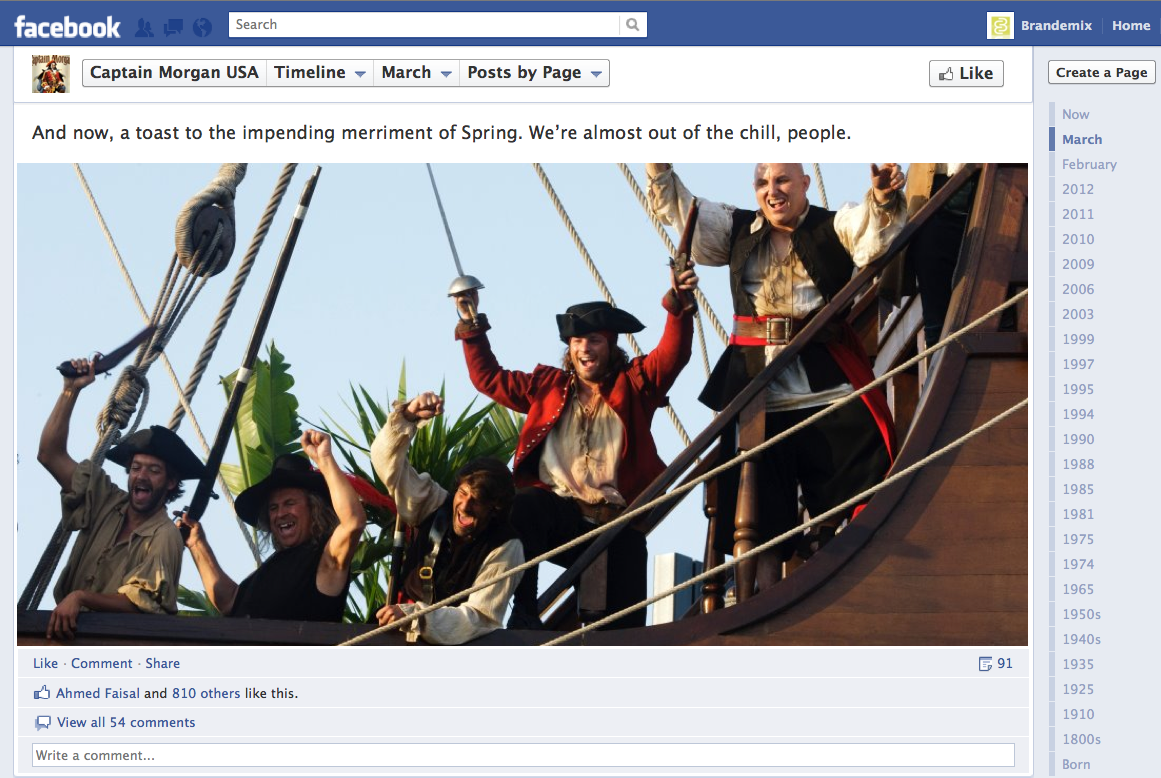
Tom Miale, Director of Multimedia Engagement at MultiVu, said that the #1 issue at this year’s South by Southwest Interactive was that brands must become storytellers to be compelling to customers. As an example, Miale presented the Facebook Page for Captain Morgan. The company uses the Timeline feature to post events all the way back to 1635, the real Morgan’s birthdate. In the 1800s section of the Timeline, you’ll find photos of Morgan’s crew, accompanied by jokes and stories in the captain’s sly tone. This is a fun and innovative way to take full advantage of the Timeline feature by creating stories that involve customers and keep them on your Facebook Page.

The Lesson: Not every brand has the adventurous history of a pirate. But you can still say a lot about your company and your product, from your humble beginnings to the challenges you’ve overcome. Your employees undoubtedly have interesting stories; ask to share them to help create a personal, emotional connection to customers. 

Fun Fact: Miale told us that, in 1965, three 60-second commercial spots could reach 80% of American adults. Today, you’d need 117 commercials to accomplish that feat.


Tasti D-Lite Swirls Around Foursqaure
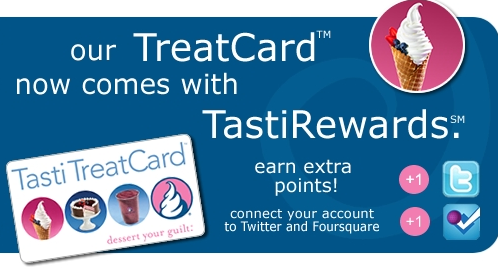
BJ Emerson, Vice President of Technology for Tasti D-Lite, may have been the hit of the conference -- and not just because he was giving out coupons. He showed how the frozen-treat company allows customers to connect their store TreatCards to Fourquare. When the clerk swipes the card, the customer is automatically checked in on Foursquare (which gets posted on Twitter and Facebook if the customer chooses). Emerson cautioned brands to “go beyond the mechanics and look at the dynamics.” He cited an example of a Tasti cashier who knew to push the “Foursquare discount” button on the register, but didn’t know what the customer meant when she said “I’m actually the Mayor.” Our social media tools seem straightforward, but you have to make sure you train your staff how to use them in face-to-face situations with customers.

The Lesson: Emerson had the most retweeted line of the conference: Referring to the fact that brands now know where their customers are in real time, thanks to Foursquare and Twitter: “We used to call it stalking; now we call it location-based marketing.” Luckily, most brands are using that knowledge for good, by giving instant discounts and prizes.

Fun Fact: Emerson recommended creating a Google Alert for online mentions of your brand. Make that alert an RSS feed and send the feed to Outlook. That way, you have an offline archive of all your mentions and can search back through years. It’s more efficient than combing through the archives on Twitter or its various applications.

This was only a small part of the great information given by knowledgeable speakers. Thanks to BDI’s Sponsorship Event Coordinator Jennifer Brous, Director of Events Maria Feola-Magro, and CEO Steve Etzler for another informative conference.

Monday, March 26, 2012

How Your Brand Can Make the Most of the New Facebook Timeline


Facebook is switching all personal profiles and brand Pages to its Timeline format this week, changing a template that many of us grown accustomed to. This exciting new format offers opportunities for brands smart enough to take advantage of them.

How can your brand make the most of the new Facebook Timeline? Read on.

Take Off From Landing
How many hours did your designer spend creating your Facebook landing page? Well, it was nice while it lasted; landing pages are gone. Facebook is trying to eliminate “like-gating” – forcing users to like a page to view any content – as well as deceptive Pages that trick you into liking or sharing them. The new format comes with only one landing page, which includes the big cover photo, tabs (now at the top), and the timeline itself. All these features are customizable.

Pin to Win
You may be tempted to post content in the large cover photo, but Facebook doesn’t allow you to post prices, contact information, or a call to action in that space. Don’t worry -- you can now keep important content at the top of your Page by “pinning” any post. The “pin” lasts seven days and ensures that it’s the first thing visitors see. If you’re running a contest or a sale, pin it!


Tell Stories
Storytelling was the most popular topic at South by Southwest this year. Brands are starting to realize that they can’t just post press releases or tweet “Thanks for following.” They must tell stories. Facebook’s timeline feature is the perfect way to share your brand’s story and make an emotional connection with your fans. Talk about odds you overcame, innovations you pioneered, or awards you earned. Add images to the timeline to make it even more compelling – people will be charmed by a picture of your first office, especially if it includes your 90s haircut!

Talk to Your Fans
Fans of a Page can now contact the brand by Facebook message, so you can make some interactions private. A complaint-and-recovery process no longer has to take up valuable Wall space, and smaller matters, like a contest winner’s home address, can now be shared privately. As Twitter direct messages have shown, people are thrilled to have personal contact with the brands they love, so find a reason to drop them a line, whether it’s “How did you enjoy your stay at our hotel?” or “Did your refund arrive on time?”

Bonus Info
A few more tips on how your brand can make the most of Facebook Timeline:

What size is the Facebook cover photo? 315 pixels high by 851 wide. The image should definitely not be smaller than 400 pixels wide.

Use the expanded Insights feature to view analytics on your Page, including the age of your Fans, which can be useful when buying Facebook Ads.


Tabs are now at the top. You can have a lot of them – Coke has 12 – but only four are visible when users first come to your site. So make sure those four have great images that make fans want to see more!

There’s no minimum fan number for a “vanity URL.” The moment you create your Page, you can make the address “facebook.com/yourbrandname.” And you can change the URL until you reach 100 fans.

Want a killer design and copywriting team to help create your new Facebook Page? Brandemix can help.

Monday, March 19, 2012

Culture Eats Strategy for Lunch, Part 3

2007: A year most notably known for the introduction of the iPhone, Jack Kevorkian’s release from prison, the Congressional Medal of Honor presented to the Dalai Lama and 2 Brandeblog entries entitled Culture Eats Strategy for Lunch, Part 1 and Part 2.

Edgar Schein, the MIT management professor who actually coined the phrase “culture eats strategy for lunch,” wrote that the success of a company is determined not by its business plan but by its people.


Welcome to Part 3, as we watch with interest Goldman Sachs’ loss of more than $2 billion in market value after a searing indictment of their culture in the New York Times by one of their own people, Greg Smith in his very public letter of resignation.


While we may think that Goldman Sachs became one of the world’s most successful investment banks because of aggressive business practices, Smith reveals that it was actually because of its employees.  “[C]ulture was always a vital part of Goldman Sachs’ success,” Smith writes. Culture “was the secret sauce that made this place great and allowed us to earn our clients’ trust for 143 years.”

Smith reflects on his former “pride” and “belief in the organization.” This is the real-deal—the emotional connection Brandemix strives to embody in each of our branding assignments.

It’s the living illustration of the service-profit chain, a philosophy that proves engaged, empowered employees may increase company profits by as much as 22%. For an investment bank, that could ladder up to billions of dollars.

Today, Smith rues the lack of “humility” and “integrity,” two of Goldman’s core values, which also include include placing clients' interests first, commitment to excellence and innovation, and teamwork. Smith calls out Goldman's two leaders, President Gary Cohn and CEO Lloyd Blankfein, for "decline in the firm's moral fiber."

No surprise. Culture starts from the top down and, as I tell clients, senior leaders must buy in, live the values, and set an example for everyone else.

I’m not alone; Frederick E. Allen, the Leadership Editor at Forbes, responded to Smith’s letter with an article titled To Save Goldman Sachs, Lloyd Blankfein Must Go. 
 
If you’re ever attended a Brandemix presentation on Employer Branding, you know how important I think an organization’s values are to employee acquisition and retention. Well, here’s that idea in reverse: a lack of values is actually causing an employee of 12 years to leave a lucrative position with bonus money on the table.

Smith isn’t just saying that the new culture isn’t for him. He’s not saying that it isn’t right. He’s saying that the culture threatens the firm’s very existence. Because the culture puts profits ahead of clients, Smith makes the equation clear: “Without clients you will no longer make money. In fact, you will not exist.”
 

Today’s disgruntled employees are sharing their stories to more than their friends and colleagues. It’s a world of One Brand, and they are speaking to your clients, your vendors, and your applicant pool.

Is your organization’s culture is the best it can be?  
Let’s find out. 

Tuesday, March 13, 2012

Brandtags Lets Brand Planners Have Some Fun!

I just stumbled onto an interesting site, still in beta, called brandtags, a product of Solve Media. It's not just a useful tool for brand research, but a fun guessing game as well. 

Brandtags' home page offers visitors a random brand name, with logo, and an empty field. Visitors are asked to enter any word or words that they associate with that brand. The total results are displayed as a word cloud.

There are also other tabs which allow you to explore brand tags without adding your own input, along with my favorite tab called "Guess Brands." That's where you see the word cloud and have to guess the brand. While it's no Words With Friends, it does keep me amused and the results can be very interesting.

3M, which makes everything from electrodes to multimedia projectors, is apparently still best-known for its Scotch Tape products; Sticky and Tape are among the largest words in its cloud, along with Good and Great. Perhaps there are some passionate fans of adhesives who visit the site?

I would have thought that airlines would have a tough time with an anonymous audience allowed to post any words that came to mind, including profanity. But American Airlines receives compliments like Awesome, Cool, Good, and OK. Words like Sucks and Late are comparatively small in the world cloud.

Maybe people were saving their wrath for banks. Bank of America’s biggest word is simply Bank. Close behind is Money, along with Red and Blue, the brand’s colors. But a wide variety of negative terms can be found throughout the word cloud: Corrupt, Terrible, Dishonest, Bankrupt, Evil, Bailout. The public wasn’t any more kind to Goldman Sachs, where Crooks, Evil, and Greedy are as large as Banking, Financial, and Investments.

Compare that to Zappos, which has a virtual thesaurus of positive words: Cute, Beautiful, Best, Nice, Comfortable, Amazing, Fun. As with any brand, there are also some negative sentiments, but they’re buried in the cloud of compliments.


Adidas seems to have a clear branding path, as its three most popular terms are Sport, Sports, and Sporty. No one seems to have a problem with Kellogg’s, either, which gets plenty of votes for Crunchy, Delicious, Yummy, and Healthy.

Brandtags turns this feature around to create a guessing game; visitors are given a brand’s word cloud and must guess the brand. For example, given terms like Car, Foreign, Dependable, Great, and Japan, would you have guessed Toyota or Honda? Either way, you’d be wrong -- the answer is Subaru.

Solve Media explains that “a brand exists entirely in people's heads, therefore a brand is whatever they say it is. Brandtags is a place where people can share their opinions about brands freely, and brand owners can learn how their brands are viewed.” I suggest all brand managers and branding agencies check in with brandtags to get a clear, honest view of what people think of brands.

Monday, March 12, 2012

A sneak peek at Brands Undercover

BP was responsible for the worst oil spill in history. Among its many consequences were some drastic effects on the company's talent acquisition. How did the BP careers site change both during and after the disaster?

Coke and Pepsi were invented in the same part of the country, eight years apart. But Interbrand values Coke at $71.8 billion, while Pepsi is valued at only $14.5 billion. The products are virtually identical, so what's the $55 billion difference?


What do the employer brand taglines of Google, Marriott, ENGlobal, and the Virginia National Guard all have common? And why is that a bad thing?

Discover the answers to these and other questions at Brands Undercover: A Behind-the-Scenes Look at Authentic Employer Branding in the Digital World. 


Hosted by the President of Brandemix, Jody Ordioni, this hour-long presentation is a funny and honest look at how major companies are succeeding, and failing, at employer branding. Whether you're beginning your branding efforts or re-branding a well-known name, Jody's insights will ensure that your brand is clear, consistent, and compelling.


Register now for this FREE event, which includes a complimentary breakfast.


Monday, March 19, from 8:30-10:30 a.m. at the New York Times Building in NYC.


We hope to see you there!